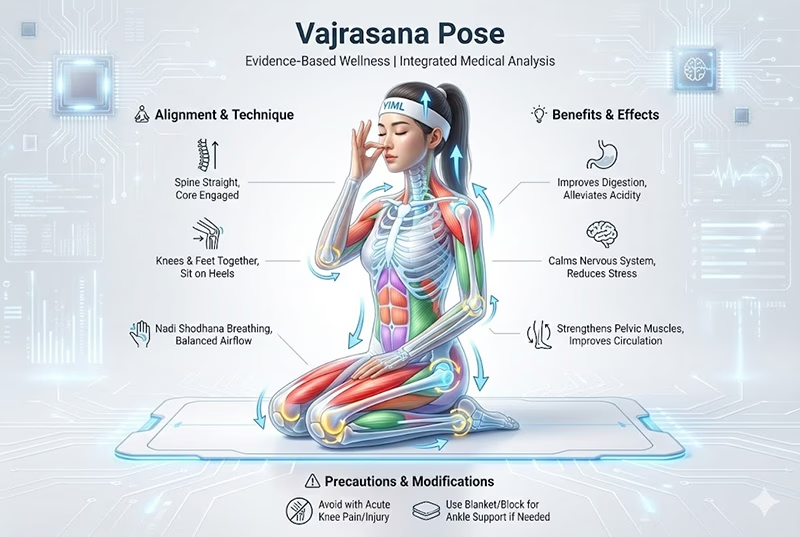
1. 🧬 The S-Curve Spring System
- Principle: Preserving the three natural spinal curvatures (Cervical and Lumbar lordosis, Thoracic kyphosis).
- Kinetic Impact: Disperses the gravity vector ($G$), mitigating direct axial compressive loading on the intervertebral discs.
- 🧘 Yoga Application: Tadasana (Mountain Pose) realigns the entire weight-bearing axis, optimizing postural endurance and preventing fatigue.
- 📚 Ref: Kapandji, I. A. (2008). The Physiology of the Joints, Vol 3. (Mathematical proof of the load-bearing capacity of natural curves versus a straight vertical axis).
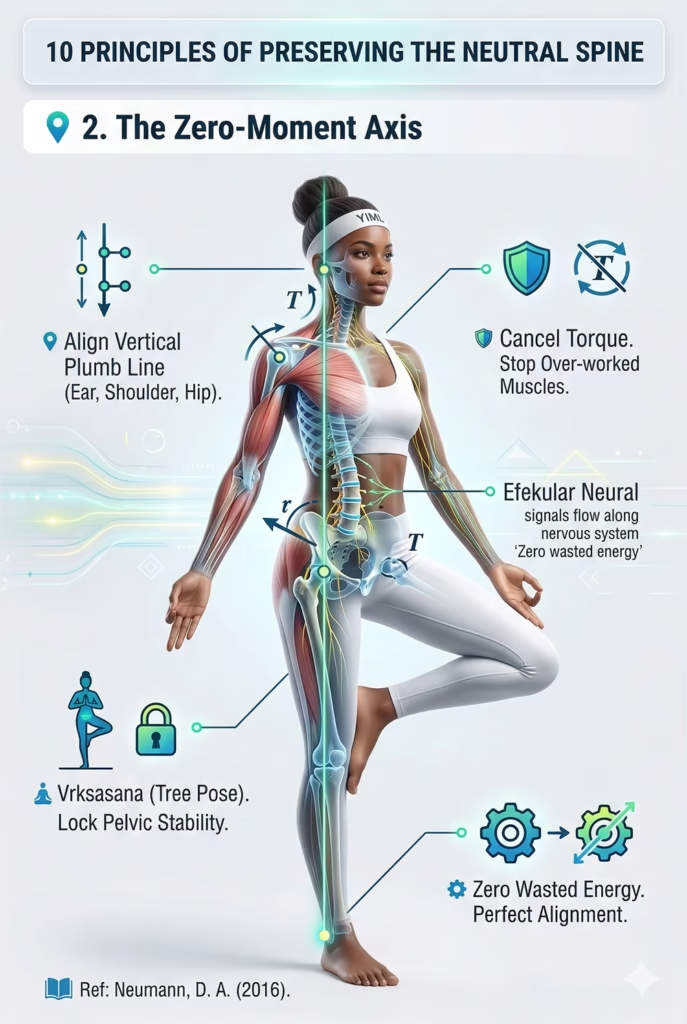
2. 📍 The Zero-Moment Axis (Center of Gravity Line)
- Principle: Aligning the ear, acromion (shoulder), and greater trochanter (hip) along a true vertical plumb line.
- Kinetic Impact: Neutralizes torque, effectively reducing the moment arm of gravitational force to zero.
- 🧘 Yoga Application: Dandasana (Staff Pose) sustains a seated posture with minimal metabolic cost and muscular exertion.
- 📚 Ref: Neumann, D. A. (2016). Kinesiology of the Musculoskeletal System. (Biomechanical theory of the center of gravity and moment arm nullification).
3. ⚖️ Cervical-Cranial Counterbalance
- Principle: Maintaining a neutral chin position with a subtle retraction toward the throat (axial extension), preventing anterior head translation.
- Kinetic Impact: Prevents the exponential (3x to 4x) increase in mechanical load on the cervical vertebrae caused by varying degrees of forward flexion.
- 🧘 Yoga Application: Chaturanga Dandasana (Four-Limbed Staff Pose) protects cervical nerve roots, eliminating post-practice cervicothoracic tension.
- 📚 Ref: Neumann, D. A. (2016) & Kapandji, I. A. (2008). (Kinematic analysis of increased cervical loading in Forward Head Posture).
4. ⚓ Dynamic Scapular Anchoring
- Principle: Externally rotating the humerus and gently depressing the acromion to flush the scapulae against the posterior ribcage (scapulothoracic stability).
- Kinetic Impact: Creates a stable kinetic fulcrum, transferring load efficiently and relieving compressive stress on the thoracic spine.
- 🧘 Yoga Application: Adho Mukha Svanasana (Downward-Facing Dog) expands the thorax while safeguarding the vulnerable rotator cuff complex.
- 📚 Ref: Long, R. (2006). The Key Muscles of Yoga, Vol 1. (Leverage mechanics and the locking mechanism of dynamic scapular anchoring).
5. 🏗️ Neutral Pelvic Foundation
- Principle: Maintaining a balanced pelvis by initiating a subtle posterior tilt (lengthening the tailbone) to prevent excessive anterior tilt (hyperlordosis) or posterior tuck (lumbar flexion).
- Kinetic Impact: Neutralizes the destructive anterior shear forces at the lumbosacral junction (L5-S1).
- 🧘 Yoga Application: In backbends and Virabhadrasana (Warrior) poses, this alignment creates a structural lock that thoroughly protects the lumbar spine.
- 📚 Ref: McGill, S. (2015). Low Back Disorders. (Clinical studies on preventing shear force and sacroiliac joint injuries).
Mastering the Neutral Spine is one of the most important foundations for preventing and managing low back pain in Yoga practice.
6. 🛡️ The Intra-Abdominal Hydraulic Cylinder (IAP & Core)
- Principle: Drawing the navel deeply toward the spine (Transversus Abdominis activation) to engage the deep core musculature.
- Kinetic Impact: Generates a “hydraulic air bag” (Intra-Abdominal Pressure – IAP) that counteracts compressive loading, effectively decompressing the intervertebral discs from the inside out.
- 🧘 Yoga Application: Navasana (6) activates Uddiyana Bandha, rendering the physical body structurally buoyant.
- 📚 Ref: McGill, S. (2015). Low Back Disorders. (Detailed biomechanical analysis of Intra-Abdominal Pressure in disc protection).
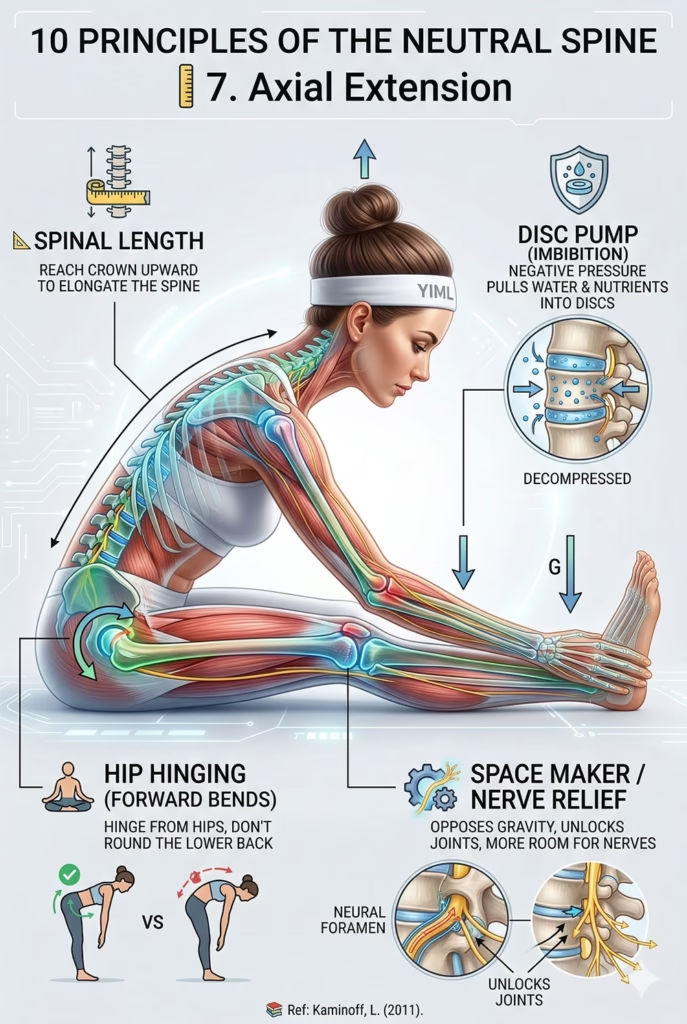
7. 📏 Axial Extension
- Principle: Continuously elongating the crown of the head upward to increase intervertebral joint space.
- Kinetic Impact: Creates an upward force vector opposing gravity, generating negative intra-discal pressure that facilitates disc hydration (imbibition).
- 🧘 Yoga Application: In Paschimottanasana (Seated Forward Bend), axial extension ensures the hinge movement originates strictly from the femoroacetabular (hip) joint, not the lumbar spine.
- 📚 Ref: Kaminoff, L. (2011). Yoga Anatomy. (Mechanism of creating intervertebral space and disc hydration via axial movement).
8. 🌓 Bilateral Load Symmetry
- Principle: Distributing body weight evenly (50/50) across both feet or both ischial tuberosities (sit bones).
- Kinetic Impact: Eliminates eccentric compressive loading, preventing destructive “wedge pressure” and annular stress on the intervertebral discs.
- 🧘 Yoga Application: Seated twists dynamically massage the bilateral viscera and help recalibrate functional scoliosis by resetting neuromuscular symmetry.
- 📚 Ref: Neumann, D. A. (2016). Kinesiology of the Musculoskeletal System. (Kinematics of asymmetrical loading and the mechanical etiology of disc herniation).
9. 🌪️ The Dynamic Respiratory Piston
- Principle: Synchronizing diaphragmatic respiration with the stabilization of the spinal axis.
- Kinetic Impact: Regulates intra-cavity pressure to maintain core rigidity during kinetic movement (Dynamic Stability).
- 🧘 Yoga Application: Ujjayi breath during a Vinyasa sequence drives oxygen deep into tissues while acting as a parasympathetic brake to maintain cardiovascular equilibrium.
- 📚 Ref: Kaminoff, L. (2011). Yoga Anatomy. (Visual mapping of the mechanical piston-like linkage between the thoracic diaphragm and the pelvic floor).
10. 🔋 Static Metabolic Efficiency
- Principle: Achieving absolute postural equilibrium where opposing force vectors naturally cancel each other out.
- Kinetic Impact: Drastically minimizes muscular co-contraction and compensatory guarding, driving the metabolic cost of posture near zero.
- 🧘 Yoga Application: Savasana (Corpse Pose) plunges the autonomic nervous system into profound parasympathetic dominance, facilitating systemic cellular repair.
- 📚 Ref: McCall, T. (2007). Yoga as Medicine. (Optimization of static energy expenditure and its clinical correlation with neurological recovery).
📥 Download the full PDF guide and access the complete pack of 20 high-resolution educational illustrations available on Etsy.