
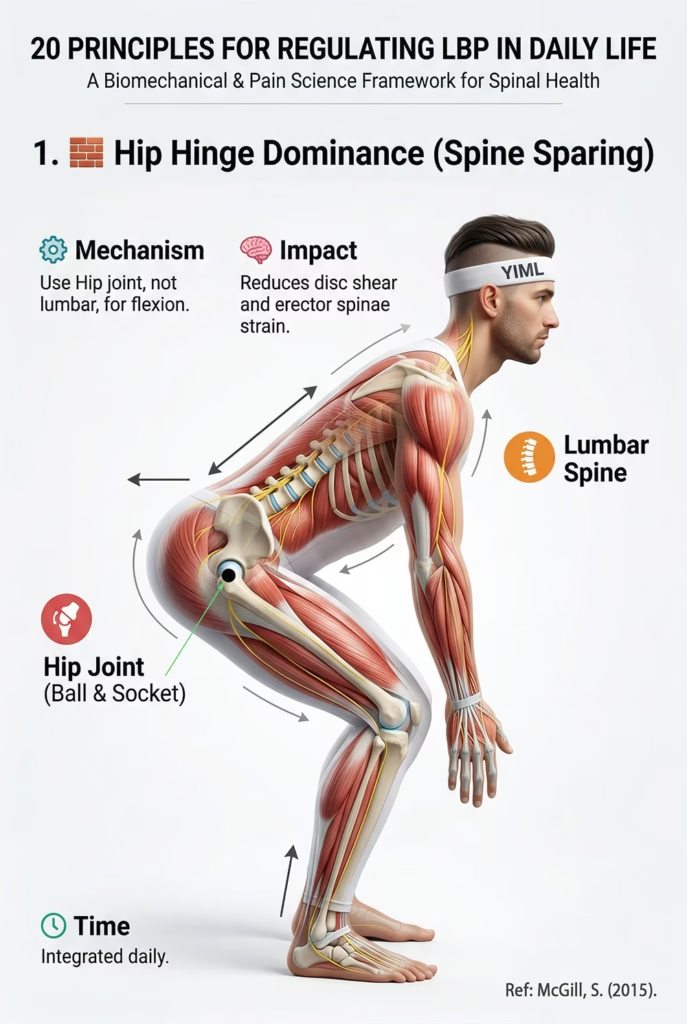
1. Hip Hinge Dominance (Spine Sparing)
- Mechanism: Using the hip joint (ball and socket) for flexion instead of the lumbar segments.
- Impact: Reduces shear force on intervertebral discs and strain on the erector spinae.
- Application: Bend at the hips, not the waist, when brushing teeth or picking up light objects.
- Contraindications: No lumbar rounding during repetitive lifting.
- Ref: McGill, S. (2015). Back Mechanic.
2. Micro-Break Strategy (Break the Static Load)
- Mechanism: Static posture causes “tissue creep” and reduces disc oxygenation.
- Impact: Prevents cumulative strain and ischemic pain in spinal tissues.
- Application: Stand up or change position every 20–30 minutes of sitting.
- Time: 1–2 minutes.
- Frequency: Throughout the workday.
3. Bracing Before Loading (Abdominal Wall Stiffening)
- Mechanism: Co-contraction of the core muscles creates “internal intra-abdominal pressure.”
- Impact: Stabilizes the lumbar spine and prevents micro-movements of unstable segments.
- Application: Gently stiffen the core before opening a heavy door or lifting a bag.
- Ref: McGill, S. (2015). The Gift of Injury.
For a deeper understanding, explore the latest research on low back pain to see how these principles are supported by current science.
4. Footwear Bio-Feedback
- Mechanism: Ground reaction forces are transmitted up the kinetic chain to the pelvis.
- Impact: Poor cushioning or unstable soles can amplify lumbar impact during gait.
- Application: Wear supportive, neutral footwear for long walks.
- Contraindications: No prolonged standing in high heels or worn-out flats.
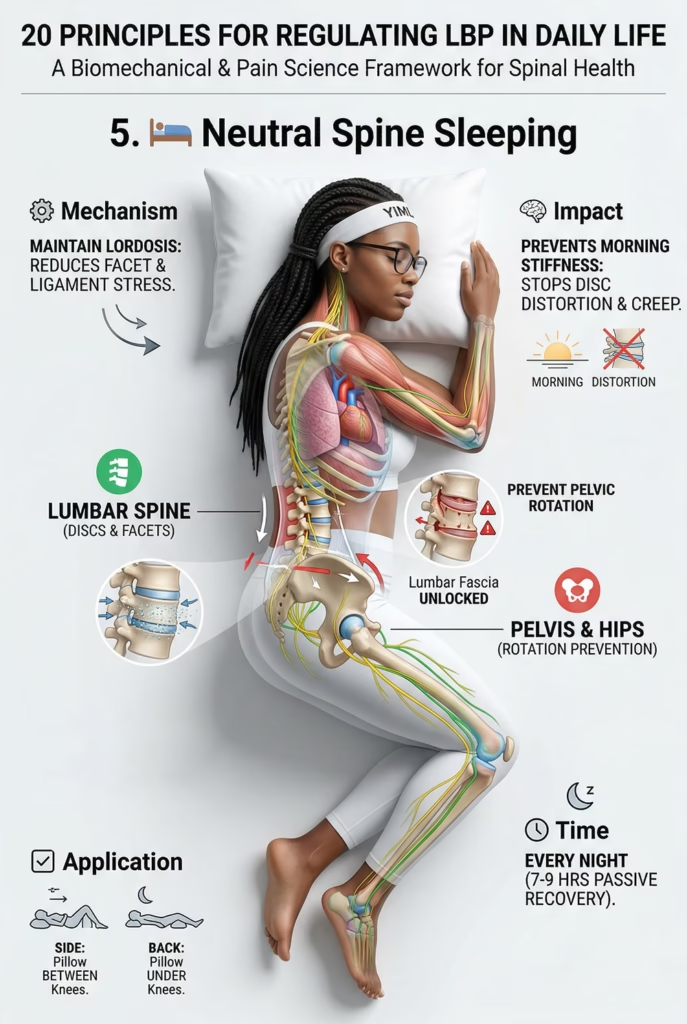
5. Neutral Spine Sleeping (Structural Support)
- Mechanism: Maintaining natural lordosis reduces end-range stress on spinal ligaments.
- Impact: Prevents “morning stiffness” caused by prolonged disc distortion.
- Application: Side sleepers: pillow between knees; Back sleepers: pillow under knees.
- Frequency: Every night.
6. Diaphragmatic Stabilization
- Mechanism: The diaphragm acts as the “roof” of the core stabilization system.
- Impact: Proper breathing increases spinal stability without excessive muscular tension.
- Application: Practice 360-degree ribcage expansion while sitting or walking.
- Ref: Hodges, P. W. (2003).
7. Gluteal Amnesia Reversal
- Mechanism: Inhibited glutes force the lower back to overwork during extension.
- Impact: Reduces the “workload” on the lumbar extensors during daily movements.
- Application: Consciously engage glutes when standing up from a chair or climbing stairs.
- Ref: McGill, S. (2015).
8. Anti-Slump Ergonomics (The Eye-Level Rule)
- Mechanism: Head-forward posture creates a “long lever” effect that pulls on the lumbar fascia.
- Impact: Reduces the posterior chain tension that contributes to LBP.
- Application: Raise your phone or monitor to eye level to maintain a neutral cervical/lumbar curve.
9. Load Distribution (The Symmetry Rule)
- Mechanism: Asymmetrical loading creates lateral shear on the spine.
- Impact: Prevents uneven wear on facet joints and unilateral muscle guarding.
- Application: Distribute weight evenly in both hands (e.g., two grocery bags vs. one).
- Contraindications: No heavy shoulder bags on one side for long durations.
10. Walking as a “Biological Nut”
- Mechanism: Natural arm swing and gait create a gentle “pumping” action for disc hydration.
- Impact: Flushes out inflammatory metabolic waste and reduces stiffness.
- Application: Fast-paced walking with a natural arm swing.
- Time: 15–20 minutes.
- Ref: McGill, S. (2015).
Stop the “Heavy Head” pull! Get the LBP Clinical Pack (Roadmap + Research + Infographics Bundle)!