I. Cervicothoracic myofascial tension release & rebalancing
📚 Ref: DOI: https://doi.org/10.1177/0269215517698735
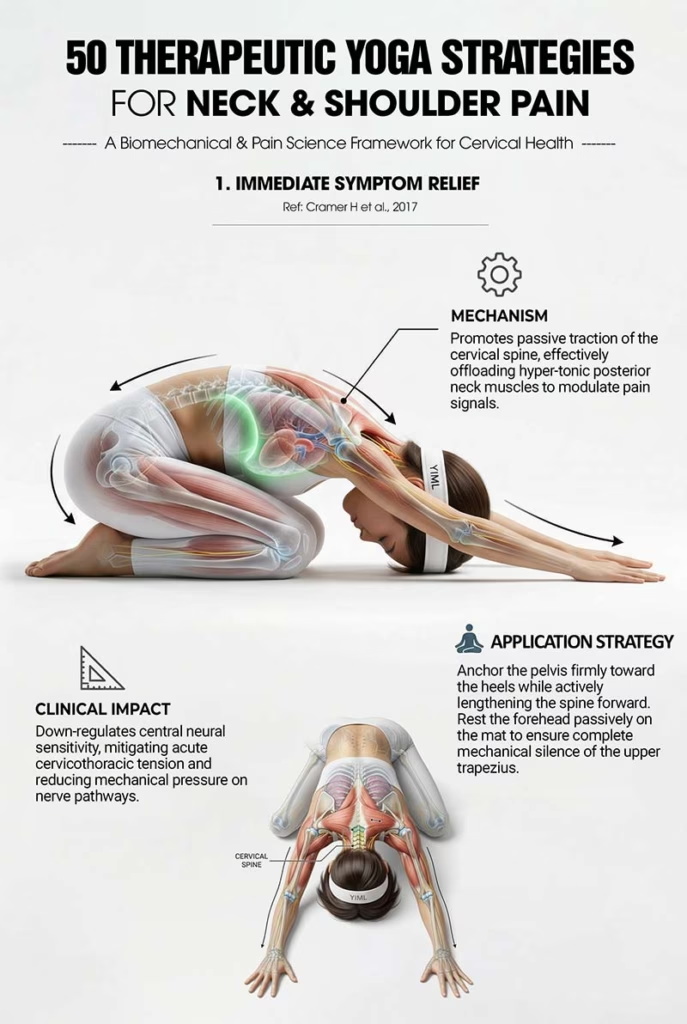
1. 🎯 Immediate Symptom Relief (Acute Nociceptive Modulation)
- Mechanism: Utilizing passive static stretching to interact with the localized, hypertonic myofascial network, while also engaging central pain-modulatory mechanisms.
- Clinical Impact: May reduce perceived pain intensity and modulate nociceptive signaling in the shoulder girdle in the short term.
- 🧘 Therapeutic Yoga: Extended Balasana (Child’s Pose) – Gently elongating the posterior myofascial chain of the upper back and shoulders.
2. 🏔️ Upper Trapezius Softening
- Mechanism: The upper trapezius frequently becomes hypertonic due to stress-related motor patterns and prolonged static postures (e.g., computer work).
- Clinical Impact: Reducing excessive muscle tone may facilitate scapular depression and help decrease perceived neck and shoulder tension, potentially contributing to relief of tension-type headache patterns.
- 🧘 Therapeutic Yoga: Seated Garudasana (Eagle Arms) – Broadening the scapulae to reduce perceived tightness in the upper trapezius and posterior shoulder complex.
3. 🏗️ Levator Scapulae Release
- Mechanism: The levator scapulae (attaching from C1–C4 to the superior angle of the scapula) contributes to cervical motion and scapular positioning; increased tone is commonly associated with restricted movement and discomfort.
- Clinical Impact: Reducing muscle tension may improve cervical rotation Range of Motion (ROM) and decrease movement-related pain, such as when looking over the shoulder.
- 🧘 Therapeutic Yoga: Seated Levator Stretch – Anchoring one hand while gently guiding the head into 45° anterolateral flexion (nose toward the opposite axilla).
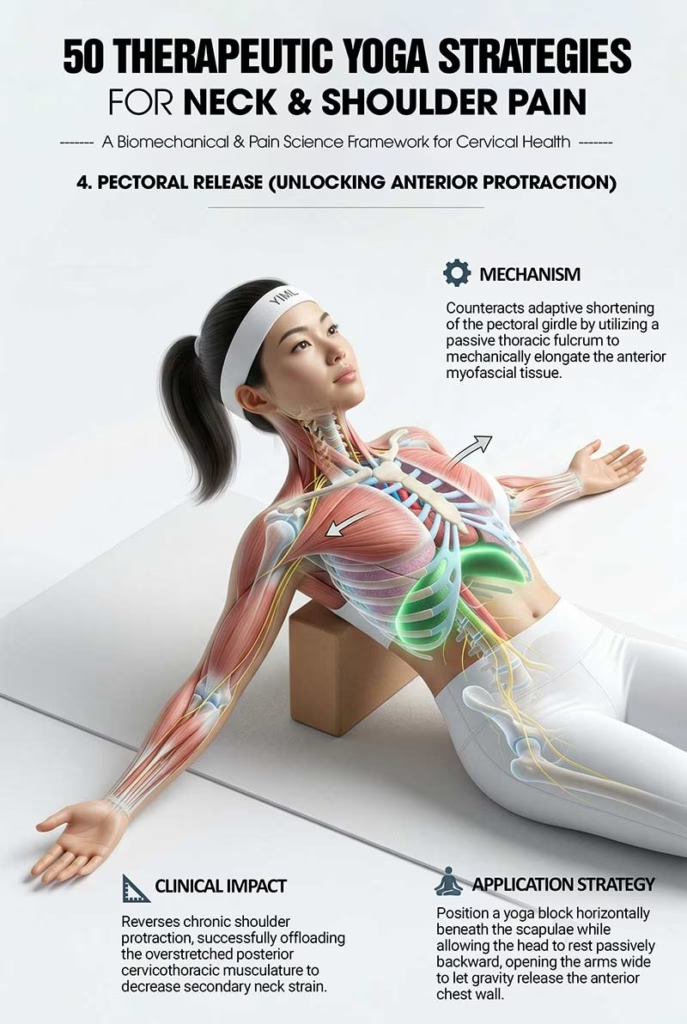
4. 🔒 Pectoral Release (Unlocking Anterior Protraction)
- Mechanism: Shortened and hypertonic pectoral muscles contribute to anterior shoulder positioning and scapular protraction.
- Clinical Impact: Expanding the thorax may help restore resting length to the anterior chain, reducing sustained anterior pull and improving cervicothoracic load distribution.
- 🧘 Therapeutic Yoga: Supported Matsyasana (Fish Pose) with a block beneath the thoracic spine – Passively opening the anterior thorax.
5. ⚖️ Upper Crossed Syndrome Rebalancing
- Mechanism: Elongating shortened anterior musculature (e.g., pectorals, suboccipitals) while activating relatively underactive posterior stabilizers (e.g., deep cervical flexors, mid/lower trapezius).
- Clinical Impact: May contribute to improved postural alignment (ear–shoulder–hip relationship) and reduce cumulative mechanical strain associated with chronic cervicothoracic discomfort.
- 🧘 Therapeutic Yoga: Low Bhujangasana (Baby Cobra) – Stretching the anterior chest while engaging posterior chain musculature.
6. 💧 Myofascial Adaptation (Viscoelastic Response)
- Mechanism: Connective tissues exhibit viscoelastic properties, meaning their resistance to stretch changes over time under sustained, low-load input.
- Clinical Impact: Sustained stretching may reduce the subjective sensation of stiffness and improve movement ease.
- 🧘 Therapeutic Yoga: Paschimottanasana (Seated Forward Bend) with an active chin tuck – Elongating the posterior chain with controlled cervical alignment.
7. 🚧 Safe Stretching Threshold (Sub-Maximal Restraint)
- Mechanism: Adhering to sub-maximal stretching reduces the likelihood of triggering protective neuromuscular responses such as excessive muscle guarding.
- Clinical Impact: Helps maintain safe tissue loading and reduces the risk of irritation or strain in the cervical region.
- 🧘 Therapeutic Yoga: Gomukhasana (Cow Face Pose) arms – Using a strap if needed to control range safely.
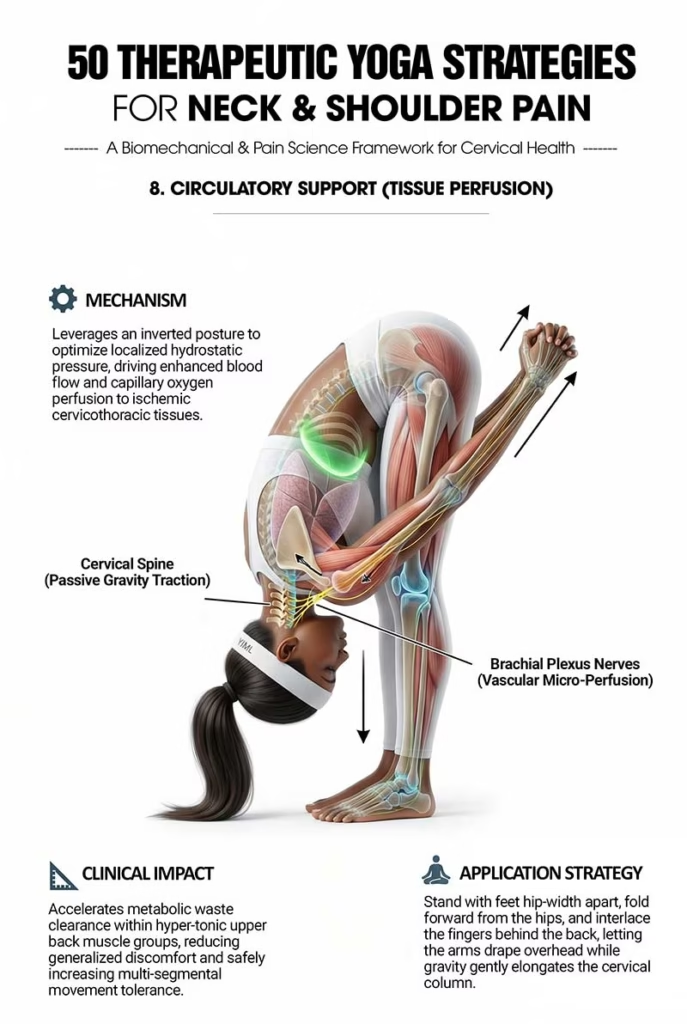
8. 🩸 Circulatory Support (Tissue Perfusion)
- Mechanism: Muscle activity and positional changes may influence local circulation and tissue perfusion.
- Clinical Impact: May contribute to reduced discomfort and improved tolerance to movement.
- 🧘 Therapeutic Yoga: Uttanasana with fingers interlaced behind the back – Encouraging gentle mobility and positional variation within the shoulder girdle.
9. 📉 Chronic Pain Intensity Reduction
- Mechanism: Yoga integrates movement, breathing, and attentional regulation, influencing both biomechanical and psychosocial contributors to chronic pain.
- Clinical Impact: Meta-analytic evidence supports reductions in pain intensity and disability in individuals with chronic neck pain.
- 🧘 Therapeutic Yoga: Supta Matsyendrasana (Supine Spinal Twist) – Gentle rotation with controlled cervical positioning.
- 📚 Ref: Cramer H et al., 2017
10. 🌅 Quality of Life Improvement (Functional Restoration)
- Mechanism: Reduction in nociceptive input combined with improved movement capacity may positively influence central regulation and functional behavior.
- Clinical Impact: Associated with improvements in functional ability, perceived well-being, and daily activity tolerance.
- 🧘 Therapeutic Yoga: Savasana (Corpse Pose) with a light cervical roll – Supporting relaxation while maintaining neutral cervical alignment.
- 📚 Ref: Cramer H et al., 2017
Want the complete system?
Unlock the Posture Care and Neck Mobility Bundle: Cervical Biomechanics & Yoga Science featuring 180+ evidence-based flashcards and 6 in-depth PDFs on posture correction, chronic neck pain, cervical biomechanics, mobility training, and yoga science.
Learn faster. Move better. Understand your neck like never before.