
Part 1: Introduction
Depression is increasingly recognized as the “silent pandemic” of the 21st century, with incidence rates surging globally, particularly post-COVID-19. However, the greatest challenge lies not just in prevalence, but in the Treatment Gap and Non-response Rates.
Current standard treatments—Pharmacotherapy (antidepressants) and Psychotherapy (e.g., CBT)—while effective, have undeniable limitations:
- Pharmacotherapy: Plagued by side effects (weight gain, sexual dysfunction, lethargy) and, crucially, a 30-50% non-response rate (Treatment-Resistant Depression).
- Psychotherapy: Often expensive, time-consuming, and inaccessible in many regions.
This landscape necessitates safe, accessible, and effective complementary therapies. Yoga has emerged as a leading candidate.
Unlike aerobic exercise, which primarily targets cardiovascular health and endorphin release, Yoga is a complex Mind-Body intervention operating via dual mechanisms:
- Bottom-Up Regulation: Physical postures (Asana) and breathwork (Pranayama) directly modulate the autonomic nervous system, down-regulating the hyperactive Hypothalamic-Pituitary-Adrenal (HPA) axis and reducing cortisol levels. This stress-axis modulation mechanism has also been documented in our analysis of autonomic dysregulation in chronic stress conditions.
- Top-Down Regulation: Meditation and mindfulness (Dhyana) alter cognitive processing, interrupting depressive rumination and enhancing emotional self-regulation.
While previous studies explored Yoga for depression, they often conflated “general sadness” with “clinical depression” and lacked clarity on what Yoga was being compared against (waitlist vs. active exercise).
Study Overview
- Title: Yoga for Depressive Disorder: A Systematic Review and Meta-Analysis
- Authors: Moosburner A, Cramer H, Bilc M, Triana J, Anheyer D.
- Year: 2024
- Link (PMC): https://pmc.ncbi.nlm.nih.gov/articles/PMC11919030/
- DOI: 10.1155/da/6071055

Why This Study Matters
This high-level meta-analysis employs rigorous inclusion criteria, offering superior clinical relevance:
- Diagnostic Specificity: It exclusively includes participants with clinically diagnosed depressive disorders (e.g., Major Depressive Disorder – MDD), excluding those with merely “general depressive symptoms.”
- Control Group Stratification: Crucially, it isolates comparisons between Yoga vs. Passive Controls (waitlist/usual care) and Yoga vs. Active Controls (aerobic exercise/health education). This distinguishes whether Yoga is simply better than “doing nothing” or if it offers unique benefits over other active interventions.
- The “Remission Paradox”: The study reveals a vital finding: while Yoga’s average symptom reduction scores might mirror those of active exercise, its remission rates (clinical recovery) are significantly higher. This challenges how we define treatment success.
Similar improvements in attentional regulation and reduced cognitive interference were observed in controlled Hatha Yoga trials.
Part 2: Objectives and Hypotheses
Primary Objective
To update and critically evaluate the current evidence regarding Yoga as a therapeutic intervention for clinically diagnosed depressive disorders.
Specific Aims:
- Evaluate Yoga’s efficacy in reducing Depression Severity.
- Assess Yoga’s impact on Remission Rates (the proportion of patients no longer meeting diagnostic criteria post-intervention).
- Compare these effects against distinct Passive and Active control groups.
- Evaluate safety profiles and impacts on Health-Related Quality of Life (HRQoL).

Scientific Hypotheses
Based on existing literature, researchers hypothesized that:
- Yoga would be vastly superior to Passive Controls.
- Yoga would be non-inferior, or potentially superior, to Active Controls due to its unique mindfulness components.
- Yoga is a safe intervention with low adverse event rates.
Part 3: Methodology
Study Design
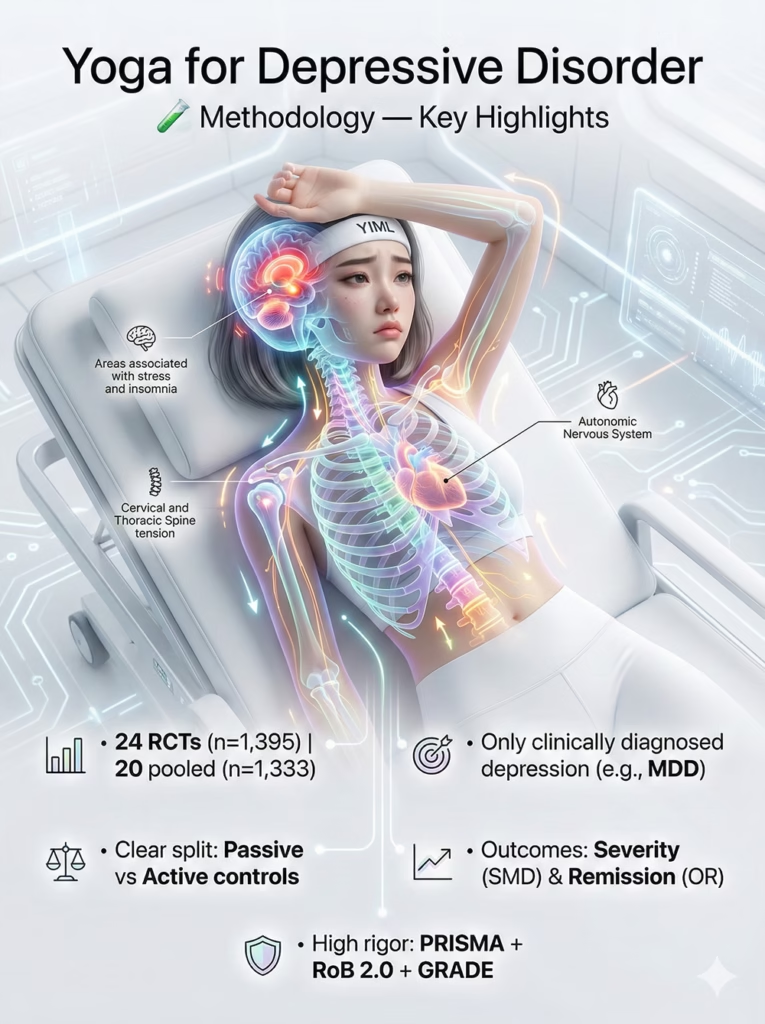
A Systematic Review and Meta-analysis of Randomized Controlled Trials (RCTs).
- Protocol: Adhered strictly to PRISMA guidelines for transparency and reproducibility.
- Risk of Bias: Assessed using the Cochrane Risk of Bias 2.0 tool (the current gold standard).
- Evidence Quality: Graded using the GRADE framework to determine the certainty of conclusions.
Participants and Inclusion Criteria
- Search Strategy: Conducted across major databases (PubMed, Cochrane, Scopus, PsycINFO, BASE).
- Inclusion: Must be RCTs; participants must have a diagnosed Depressive Disorder (including MDD); the intervention must be Yoga (Asana, Pranayama, Meditation, or a combination).
- Sample Size: 24 studies (n = 1,395) were included in the systematic review, with 20 studies (n = 1,333) providing sufficient data for the meta-analysis.
Data Analysis (The Stratification Strategy)
The methodological strength lies in stratifying the control groups:
- Vs. Passive Controls: (Waitlist or Treatment as Usual). Answers: Is Yoga better than doing nothing?
- Vs. Active Controls: (Aerobic exercise, attention control, health education). Answers: Does Yoga offer unique therapeutic value beyond general physical activity?
Clinical Outcome Measures
- Primary Outcomes:
- Severity: Measured by standardized scales (e.g., BDI, HAM-D). Data pooled using Standardized Mean Differences (SMD).
- Remission Rates: The proportion of participants scoring below clinical thresholds post-intervention. Data pooled using Odds Ratios (OR).
- Secondary Outcomes: Health-Related Quality of Life (HRQoL) and Adverse Events.
Part 4: Results
Based on pooled data from 20 RCTs involving 1,333 participants, this study paints a sharp picture of Yoga’s distinct position compared to other interventions. We delve into the “Statistical Paradox” mentioned earlier: the profound difference between “reducing symptom scores” and achieving “clinical remission.”
On Depression Severity (Symptom Reduction)
This is the most common metric (e.g., how many points a patient’s score dropped on a standardized depression scale).
1. Yoga vs. Passive Control (Waitlist/Usual Care)
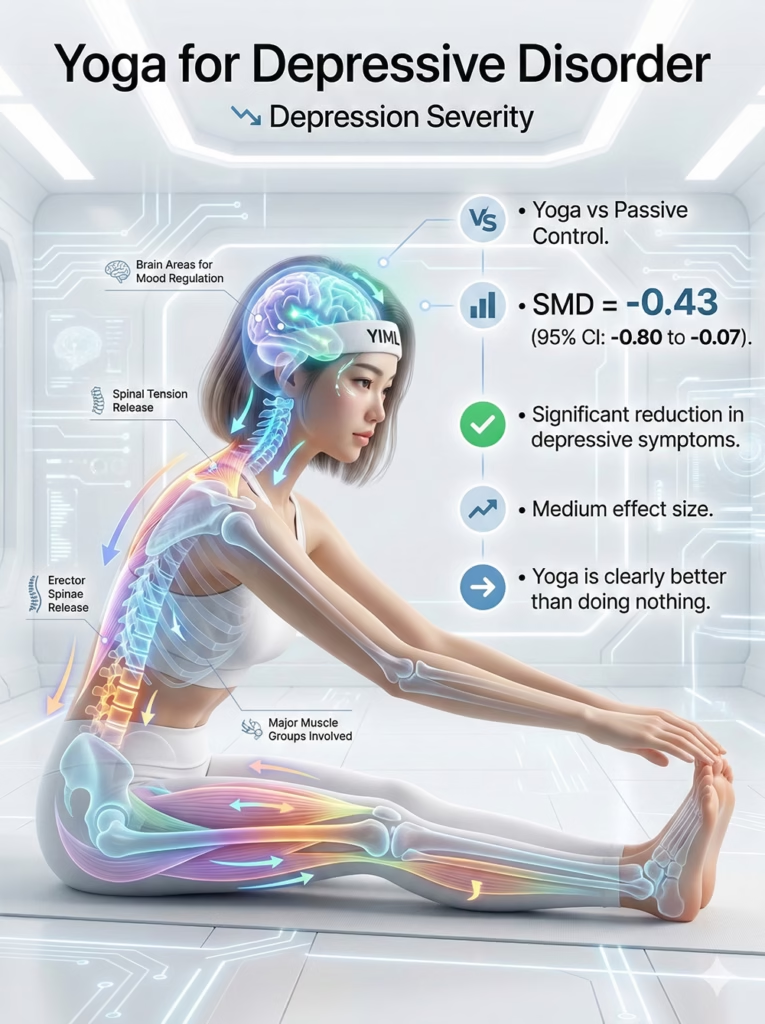
- Result: Yoga significantly reduced depression severity compared to doing nothing or remaining on a waitlist.
- Standardized Mean Difference (SMD): -0.43 (95% CI: -0.80 to -0.07).
- Medical Significance: This represents a medium effect size, confirming Yoga has genuine therapeutic efficacy, not just a placebo effect.
- Layman’s translation: If you are depressed, doing Yoga is definitively better than just waiting for things to get better or sticking only to your standard routine. It actively relieves the heavy sadness.
2. Yoga vs. Active Control (Exercise/Education)
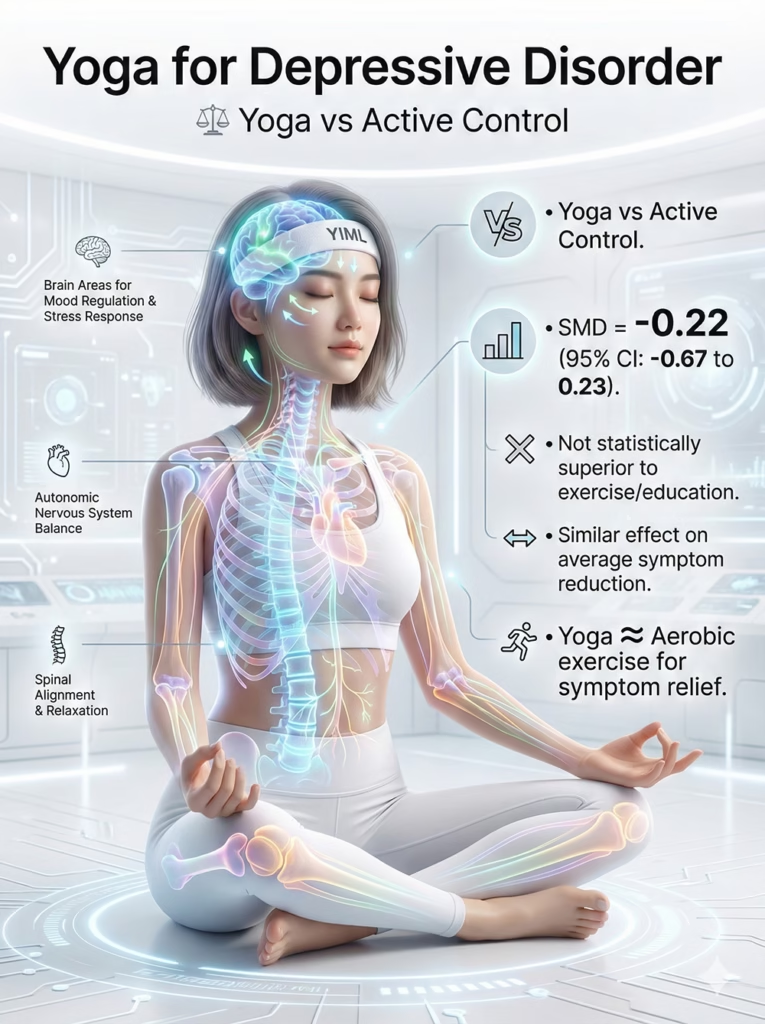
- Result: When compared to active exercises (aerobics, walking) or health education, Yoga did NOT show statistically significant superiority in average score reduction.
- SMD: -0.22 (95% CI: -0.67 to 0.23).
- Medical Analysis: The confidence interval crosses zero, meaning statistically, Yoga and aerobic exercise are equally effective at reducing overall depression scores. Yoga didn’t “win” this specific category.
- Layman’s translation: If your only goal is to feel “a bit better” or “less sad” today, going for a run or taking a Yoga class will give you roughly the same amount of relief.
On Remission Rates – THE “GAME CHANGER” RESULT
This is the study’s most crucial and surprising finding. “Remission” means the patient improves so much that they no longer meet the clinical criteria for depression; essentially, they are “cured” of the episode.
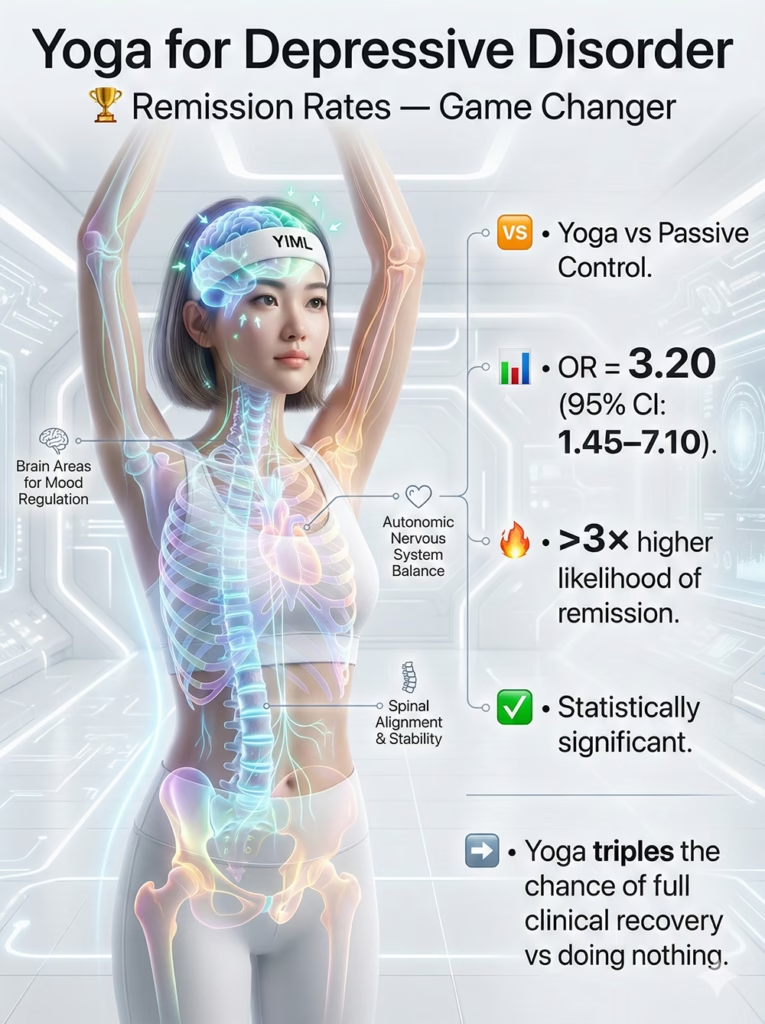
1. Yoga vs. Passive Control
- Result: Yoga increased the likelihood of remission by more than 3 times.
- Odds Ratio (OR): 3.20 (95% CI: 1.45 to 7.10).
- Layman’s translation: Compared to doing nothing, practicing Yoga triples your chances of completely escaping the dark cloud of depression.
2. Yoga vs. Active Control
- Result: Although average scores didn’t drop much more (as seen above), Yoga helped patients achieve full remission at double the rate of the exercise/education group.
- Odds Ratio (OR): 2.04 (95% CI: 1.13 to 3.69).
- Medical Significance: The confidence interval does not cross 1, making this a robust, statistically significant finding. This suggests Yoga has a unique capacity to push patients across the “finish line” of recovery better than standard exercise.
- Layman’s translation: Running might make you feel less sad, but Yoga is TWICE as likely to actually pull you completely out of the depressive episode so you feel like your normal self again.

On Safety
- Result: No difference in adverse events between Yoga and either control group (OR ~ 1.00).
- Layman’s translation: Yoga is incredibly safe. It won’t cause the negative side effects (like weight gain or brain fog) that antidepressants often do.
Part 5: Discussion
The results ignite a profound discussion on the nature of recovery in depression. Why does Yoga “tie” with Exercise in lowering average scores, but “beat” Exercise in actually curing the episode (remission)?
Decoding the Paradox: Why Yoga Drives Remission Better Than Exercise
To understand this, we must differentiate the mechanisms of Active Control (Aerobics) and Yoga.
- The Limits of Aerobics: Exercise is a potent antidepressant. It boosts circulation, releases endorphins, and increases BDNF (Brain-Derived Neurotrophic Factor), which nourishes neurons. It makes patients feel better (reducing severity scores). However, depression isn’t just a neurochemical issue; it’s a cognitive one (negative thinking, rumination). Running can elevate your mood in the moment, but it doesn’t necessarily teach you how to handle the dark thoughts when they return. Moreover, sleep disturbance remains one of the strongest predictors of relapse in Major Depressive Disorder.
- The “Dual Power” of Yoga (Mind-Body): Yoga does everything exercise does (movement, endorphins), BUT it adds Mindfulness and Breath Regulation (Pranayama). This distinction has empirical support: in a randomized controlled comparison, participants practicing yoga showed significantly greater increases in brain GABA levels and mood improvements than those doing matched walking exercise, suggesting that yoga engages neurochemical and regulatory pathways beyond simple aerobic activity (DOI: 10.1089/acm.2010.0007).
- Cognitive Mechanism: Meditation teaches patients to identify and “detach” from downward spirals of negative thoughts, addressing the psychological root of depression.
- Self-Regulation: Learning to breathe calmly provides a “self-rescue” tool patients can use in daily life when anxiety hits.
- The “Threshold Push” Hypothesis: Exercise might lower everyone’s score a little bit. However, Yoga’s cognitive shift helps a specific subset of patients drop their scores so deeply that they cross the clinical threshold from “depressed” to “healthy” (doubling the Remission OR). For a complex pathology like Major Depressive Disorder (MDD), the “Movement + Mindfulness” formula is simply more complete.

Clinical Significance and Risk-Benefit Ratio
While the GRADE evidence quality was rated moderate to very low (typical for non-blinded behavioral studies), finding an OR of 2.04 (double the remission rate) is too powerful a clinical signal to ignore. For patients with MDD—a severe, often treatment-resistant group—having a non-pharmacological option that doubles the chance of remission with near-zero risk (OR ~ 1.00) is invaluable. It strongly supports prescribing Yoga as a standalone therapy for mild/moderate depression or an essential add-on for severe cases.
Study Limitations
- Heterogeneity: Studies used various Yoga styles (Hatha, Iyengar, Kundalini). We do not yet know which specific style is superior.
- No Quality of Life (QoL) Data: Due to messy reporting, a meta-analysis on QoL couldn’t be run, which is unfortunate as QoL is a primary patient goal.
- Lack of Blinding: Patients knew they were doing Yoga, so the placebo effect likely contributed to these subjective reports.
Clinical Application (The Psychiatrist’s Perspective)
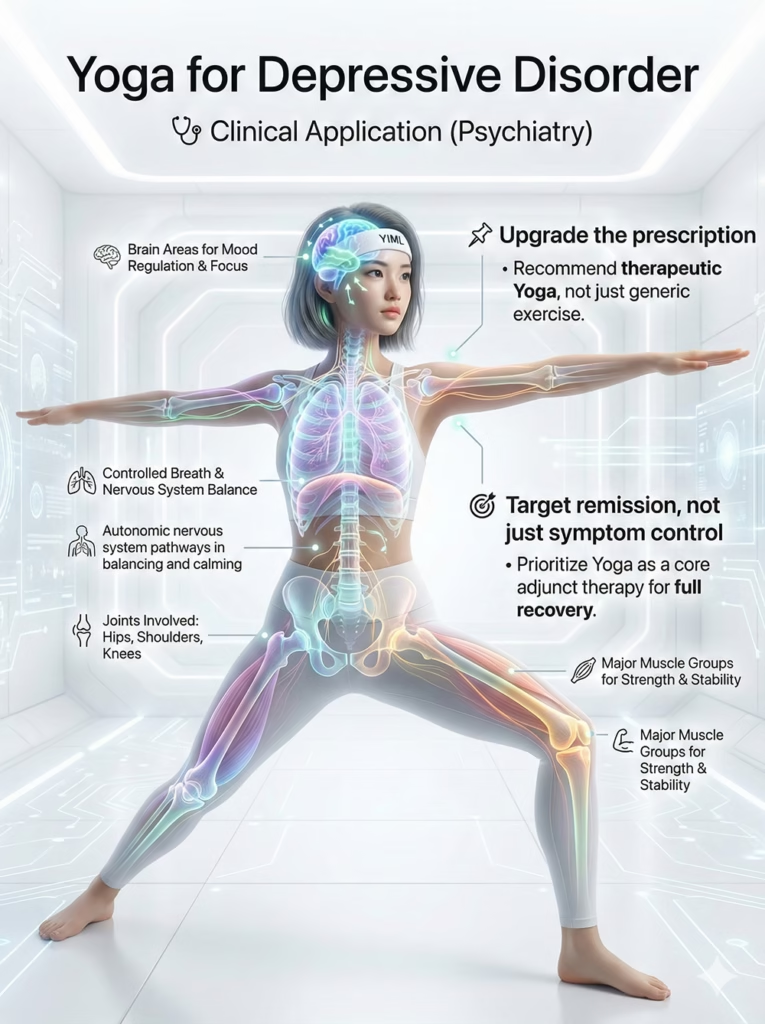
- Upgrade the Prescription: Instead of a generic “go get some exercise,” physicians should specifically advise, “Try Therapeutic Yoga.” Based on this data, it offers a higher chance of full recovery than gym workouts alone.
- The Goal is Remission: If the therapeutic goal is getting the patient back to normal (Remission) rather than just “managing symptoms,” Yoga must be prioritized as a core adjunctive therapy.
Practical Application (The Yoga Therapist’s Perspective)
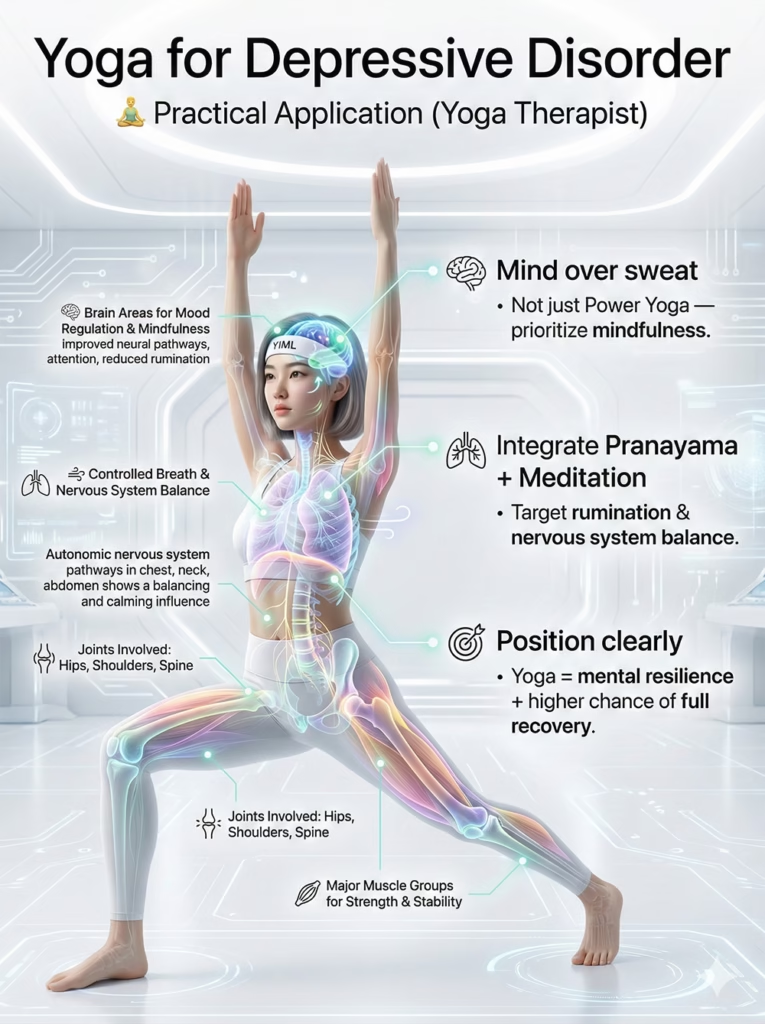
- Focus on the “Mind”: The difference between Yoga and gym workouts lies in Mindfulness. A Yoga class for depression should not just be a sweaty “Power Yoga” workout. Gentle spinal mobilization sequences such as Cat–Cow can help initiate breath-synchronized movement.
- Quiet the Curriculum: To achieve “remission,” the sequence must deeply integrate Pranayama (to balance the nervous system) and Dhyana/Meditation (to shift cognitive rumination).
- Positioning: Therapists can confidently state: “Yoga isn’t just a workout to temporarily boost your mood. It’s a comprehensive practice that rebuilds your mental resilience and significantly increases your chances of a full recovery.”
Part 6: Conclusion
This latest Systematic Review and Meta-Analysis (PMC11919030) provides high-level evidence solidifying Yoga’s vital role in treating Depressive Disorders.
The core conclusion carries a powerful message regarding Remission:
- Symptom Reduction: Yoga is significantly more effective than doing nothing and equally as effective as aerobic exercise in reducing the severity of depression.
- The Game Changer (Healing): Crucially, Yoga vastly outperforms both passive and active controls (including exercise) in Remission Rates. Patients practicing Yoga are 2.04 times more likely to completely escape their depression diagnosis compared to those doing other active exercises.
- Safety: Yoga is a highly safe, low-risk intervention.
This research proves Yoga is far more than “gentle stretching.” Through its unique triad of physical movement, breath control, and mental training, Yoga provides a comprehensive therapeutic mechanism. It helps patients not just feel “less sad,” but gives them a mathematically higher chance of being truly “cured.” This is compelling evidence to integrate Yoga as a standard, frontline adjunctive treatment for Depressive Disorders, particularly MDD.
References
- Moosburner A., et al. (2024). Yoga for depressive disorders: a systematic review and meta-analysis of randomized controlled trials. PMC11919030.
- Cramer, H., et al. (2013). Yoga for depression: a systematic review and meta-analysis. Depression and Anxiety. (Foundational reference for comparison).
![The Biomechanical Demands of Standing Yoga Poses in Seniors [RESEARCH DECODED]](https://yogaismylife.vn/en/wp-content/uploads/2026/02/tu-the-chien-binh-cho-nguoi-cao-tuoi.webp)
![The Impact of Yoga on Pediatric Obesity [RESEARCH DECODED]](https://yogaismylife.vn/en/wp-content/uploads/2026/02/The-Impact-of-Yoga-on-Pediatric-Obesity.avif)